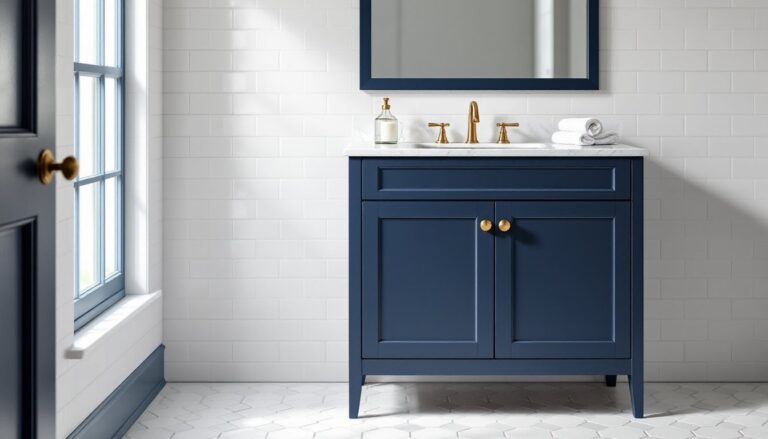
The vanity mirror defines your bathroom’s look and function more than almost any other fixture. It’s the first thing you see in the morning and the last touchpoint before leaving, and it takes up a significant chunk of wall real estate. Whether you’re renovating a powder room or upgrading a primary bath, the right mirror does more than reflect: it shapes light flow, affects perceived size, and anchors your design scheme. This guide walks through 15+ proven vanity mirror ideas, from timeless framed classics to LED-integrated smart mirrors, with honest advice on installation, proportion, and what actually works in a wet environment.
Table of Contents
ToggleKey Takeaways
- Bathroom vanity mirror ideas should prioritize size and placement—aim for mirrors covering 60–75% of vanity width and centered at 57–65 inches from the floor for optimal eye-level alignment.
- Framed mirrors add architectural warmth through wood, metal, or ornate finishes, but require heavy-duty mounting with D-rings rated for 50+ lbs; frameless options offer affordability and clean lines suitable for modern spaces.
- LED and backlit vanity mirrors eliminate separate sconce fixtures by combining task lighting, ambient light, and defogger features, though installation requires GFCI-protected wiring and often a licensed electrician.
- Moisture resistance is critical—choose mirrors with sealed edges and corrosion-resistant backing, especially in steam-heavy bathrooms, or pair with proper exhaust ventilation to prevent delamination.
- Mirror shape and size should match your bathroom layout: small bathrooms benefit from single large frameless mirrors, double vanities suit one 60–72 inch mirror or dual smaller mirrors, and powder rooms allow bold statement pieces.
- Sconce lighting should mount 60–65 inches from the floor and 28–30 inches apart, with the vanity mirror positioned 4–6 inches narrower than the vanity to allow proper fixture clearance and even face lighting.
Why Your Vanity Mirror Choice Matters More Than You Think
Mirrors aren’t just cosmetic. A poorly sized mirror throws off a vanity’s proportions, making a well-designed space feel off-balance. Too small, and you’re left with dead wall space: too large, and it overwhelms the room or blocks sconce placement.
From a functional standpoint, mirror placement affects task lighting efficiency. A mirror that sits too high or doesn’t align with eye level creates shadows where you need clarity. If you’re installing sconces or overhead fixtures, the mirror’s width and height dictate mounting zones, most building codes require fixtures to be at least 60 inches above the floor for clearance, and symmetrical sconce placement typically means your mirror width should be 4–6 inches narrower than your vanity.
Moisture resistance matters, too. Bathroom humidity accelerates delamination in cheap mirrors. Look for mirrors with moisture-resistant backing or sealed edges, especially if you have poor ventilation. In steam-heavy bathrooms, backlit or defogger-equipped mirrors can eliminate the post-shower wipe-down routine entirely.
Framed Mirror Ideas for Classic Elegance
Framed mirrors anchor a bathroom with architecture and color. They’re the easiest way to introduce warmth or contrast, especially in bathrooms with minimal trim or bland tile.
Wood Frames bring organic texture. For traditional or farmhouse baths, a stained oak or walnut frame in a 2–4 inch width adds heft without feeling heavy. In coastal or Scandinavian-style spaces, a whitewashed or light maple frame keeps things airy. Just make sure the wood is sealed or painted with moisture-resistant primer, raw wood will warp in high-humidity zones.
Metal Frames work in industrial, modern, and transitional bathrooms. Matte black is common, but brushed brass, oil-rubbed bronze, or brushed nickel tie into fixture finishes. A thin metal profile (around 1 inch) suits minimalist setups, while a wider frame makes a statement in larger bathrooms. Some contemporary bathroom designs lean heavily on mixed metals, pairing black mirrors with brass faucets for deliberate contrast.
Ornate or Vintage Frames fit eclectic, glam, or heritage-style bathrooms. Gilt, carved wood, or antique reproductions add character, but scale matters. An oversized baroque frame works in a spacious primary bath: in a narrow powder room, it’s overkill. Shop architectural salvage yards or online retailers for authentic vintage pieces, just verify the mirror backing is intact and moisture-sealed before hanging.
For installation, framed mirrors are typically heavier than frameless. Use two D-rings and picture wire rated for the mirror’s weight, and anchor into studs or use heavy-duty drywall anchors rated for at least 50 lbs per anchor. A 36-inch framed mirror can easily weigh 20–30 lbs.
Frameless and Minimalist Mirror Options
Frameless mirrors maximize reflection and suit modern, Scandinavian, or small bathrooms where visual clutter needs to stay low. They’re also typically more affordable and lighter than framed alternatives.
Beveled-Edge Mirrors add a subtle border without a frame. The bevel catches light and creates definition, which helps in all-white or monochrome bathrooms. Standard bevel widths run 1–2 inches. They’re classic and work in nearly any style, from midcentury to contemporary.
Flat-Polish Frameless Mirrors have a clean, squared edge. They disappear into the wall, which is ideal if you want tile, paint color, or other fixtures to dominate. These are commonly used in wet rooms or European-style bathrooms where the mirror is one element in a highly integrated design.
Rounded or Soft-Edge Mirrors take the hard geometry out of a space. Rounded rectangles, ovals, and circles soften angular tile or cabinetry. A 30-inch round mirror works well over a pedestal sink or small vanity: larger ovals (up to 40 inches wide) suit double vanities when you want a single statement piece instead of two separate mirrors.
Installation is straightforward. Most frameless mirrors come with clips or adhesive-mount hardware. Mirror mastic adhesive works for permanent mounting on drywall, tile, or plaster. If you want removability, use J-channel clips at the bottom and Z-clips at the top, both allow you to swap mirrors later without patching.
One downside: frameless mirrors offer no room to hide imperfect drywall or tile edges. If your wall texture is rough or tile cuts are uneven, a frame covers those flaws.
LED and Backlit Mirrors for Modern Functionality
LED mirrors are rapidly becoming the go-to for renovations and new builds. They combine ambient lighting, task lighting, and defogging in one fixture, eliminating the need for separate sconces in some cases.
Most LED mirrors feature edge-lit or backlit strips that produce diffused, shadow-free light. Color temperature matters: 3000K–4000K (warm to neutral white) is ideal for grooming tasks. Anything cooler looks clinical: anything warmer distorts makeup tones.
Some models include dimming, color-temperature adjustment, and motion sensors. Dimmers are useful if your bathroom doubles as a relaxation space, bright task light in the morning, soft ambient glow at night. Motion sensors and touch controls are convenient, but they require low-voltage wiring and sometimes a dedicated transformer, which adds installation complexity.
Defogger pads built into the mirror surface are a game-changer in steam-heavy bathrooms. They use low-wattage heating elements to keep the mirror clear. Expect to pay a premium, but the feature eliminates manual wipe-downs and water spots.
Installation typically requires hardwiring. Most LED mirrors run on 12V or 24V DC, so you’ll need a driver (usually included) connected to a standard 120V AC bathroom circuit. If your vanity area doesn’t have an outlet or junction box, you’ll need to run new wiring, consider hiring a licensed electrician to ensure code compliance, especially for wet-location fixtures. The National Electrical Code (NEC) requires GFCI protection for all bathroom outlets and fixtures within certain zones.
LED mirrors range from 24 to 72 inches wide. For single vanities, a 30–48 inch mirror is standard: double vanities often use a single 60–72 inch mirror or two smaller mirrors. Verify the mounting method, some are cleat-mounted, others require French cleats or threaded rods.
Creative Shape and Size Combinations
Breaking away from the standard horizontal rectangle opens up a lot of design flexibility, and sometimes solves tricky layout problems.
Vertical Mirrors work in narrow bathrooms or where ceiling height is generous. A tall, narrow mirror (say, 20 inches wide by 60 inches tall) draws the eye up and makes a small room feel taller. This is common in powder rooms where floor space is tight.
Dual Round or Oval Mirrors over a double vanity create symmetry without a single wide slab. Two 24–30 inch round mirrors centered over each sink add softness and work especially well in modern farmhouse or coastal bathrooms. Make sure they’re hung at the same height and spaced evenly, measure from the sink centerlines, not the vanity edges.
Asymmetric or Offset Mirrors suit eclectic or contemporary spaces. You might pair a large round mirror on one side with a smaller rectangular mirror on the other, or mount a single oversized mirror off-center to balance a freestanding tub or accent wall. This approach takes confidence and careful planning: sketch it out or use painter’s tape on the wall first.
Medicine Cabinets with Mirrored Doors are a hybrid solution that maximizes storage in small bathrooms. Recessed models (which sit inside the wall cavity between studs) save space: surface-mount versions are easier to install and work when wall depth is limited. Standard widths are 14, 16, 20, and 24 inches, choose based on stud spacing. Many modern bathroom layouts integrate recessed cabinets to keep counters clutter-free.
When mixing shapes or sizes, keep proportions in check. The mirror(s) should cover roughly 60–75% of the vanity width. Much less, and the wall feels bare: much more, and it crowds sconce or faucet placement.
Choosing the Right Mirror for Your Bathroom Style and Layout
Matching your mirror to your bathroom’s style and physical constraints is where theory meets practice. Here’s a quick decision framework:
For Small Bathrooms (Under 50 sq ft): Go frameless or thin-framed to reduce visual weight. A single large mirror (or a mirrored wall) bounces light and makes the space feel larger. Avoid heavy ornate frames or multiple small mirrors, which chop up the wall and make the room feel busier.
For Double Vanities: You have two main options, one wide mirror spanning both sinks, or two separate mirrors. A single mirror (typically 60–72 inches) creates a sleek, unified look and simplifies sconce placement. Dual mirrors (each 24–36 inches) allow individual styling and can better accommodate different user heights or preferences. Leave 4–6 inches between mirrors if going the dual route.
For Powder Rooms: This is where you can take risks. A bold frame, unusual shape, or statement LED mirror adds personality. Since powder rooms aren’t daily-use spaces for grooming, you can prioritize aesthetics over perfect task lighting.
For Primary Bathrooms: Balance form and function. If you rely on the mirror for makeup, shaving, or contact lenses, prioritize size, lighting, and defogger features. Frame choice should tie into cabinetry, tile, and fixture finishes, matchy-matchy isn’t required, but complementary tones create cohesion.
Lighting Coordination: If you’re using sconces, mount them 60–65 inches from the floor (center of fixture) and 28–30 inches apart for even face lighting. The mirror should fit between the sconces with a few inches of clearance. If you’re using an LED mirror as your primary light source, check the lumen output, aim for at least 400–600 lumens per fixture for adequate task lighting.
Height Placement: Standard practice is to hang the mirror so its center sits at average eye level, around 57–65 inches from the floor. Adjust based on household height. If you have a tall backsplash or vessel sink, the mirror may sit higher. Mirrors with built-in shelving offer storage and can influence mounting height, position shelves at a comfortable reach.
Moisture and Ventilation: Bathrooms without exhaust fans or windows need mirrors with sealed edges and corrosion-resistant backing. If condensation is chronic, upgrade your ventilation (most codes require exhaust fans rated for the room’s cubic footage) before investing in a high-end mirror.
Conclusion
The right vanity mirror does more than reflect, it balances proportion, enhances lighting, and ties your bathroom’s design together. Whether you go with a classic wood frame, a sleek frameless slab, or a feature-rich LED mirror, prioritize fit, function, and moisture resistance. Measure carefully, plan your lighting, and don’t skip the backing quality. A well-chosen mirror elevates the space for years.