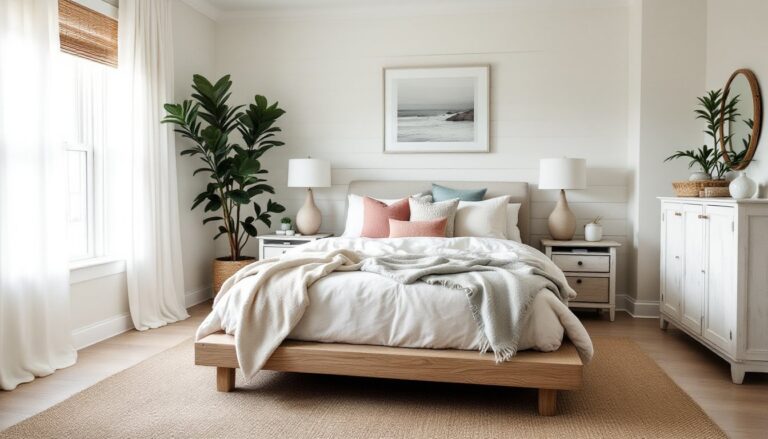
A rug can make or break a bedroom’s feel. Drop one in the wrong spot, and the room looks smaller, the furniture awkward, the whole layout off-balance. Get the placement right, and suddenly the bed feels anchored, the floor warmer underfoot, and the space pulls together without any heavy lifting.
Most bedrooms can accommodate multiple rug layouts depending on room size, furniture arrangement, and personal preference. The key is understanding how different placements interact with bed frames, nightstands, and traffic patterns. This guide walks through seven proven rug placement strategies that work in real-world bedrooms, from compact rentals to spacious primaries.
Table of Contents
ToggleKey Takeaways
- Bedroom rug placement ideas directly impact visual balance, thermal comfort, and furniture stability by determining how the space feels cohesive and inviting.
- The classic under-the-bed placement with 8×10 or 9×12 rugs works best for larger bedrooms, providing symmetry and ensuring both partners step onto a soft surface when getting out of bed.
- Bedside runner rugs (2.5×8 or 3×10 feet) are ideal for smaller spaces and budget-conscious designs, though they don’t visually anchor the bed like larger rugs do.
- Floating a rug in front of the bed showcases bold designs and works in rooms with awkward layouts, but leaves sleepers stepping onto cold flooring unless benches or storage are placed at the foot.
- Layering a smaller patterned accent rug over a larger neutral base adds depth and visual interest while keeping pile height under 1.5 inches to avoid tripping hazards.
- Always tape out your rug footprint on the floor before purchasing to account for door swings, closet clearances, and ensure 8-12 inches of exposed flooring between the rug edge and walls for proper visual breathing room.
Why Rug Placement Matters in Bedroom Design
Rug placement isn’t decorative guesswork. It affects three practical elements: visual proportion, thermal comfort, and furniture stability.
Visual proportion determines whether a room feels balanced or lopsided. A rug that’s too small creates a “floating island” effect, making furniture look disconnected. One that’s too large or poorly positioned can crowd the space and make the room feel smaller than it actually is.
Thermal comfort matters most in bedrooms with hard flooring, hardwood, tile, or laminate. First steps out of bed hit cold surfaces unless a rug bridges that gap. Placement dictates whether both sides of the bed get equal warmth or only one person benefits.
Furniture stability comes into play when nightstands, benches, or dressers sit partially on a rug. Uneven surfaces can cause wobbling, especially with cheaper furniture or low-pile rugs over thick padding. Designers typically recommend keeping all four legs of a piece either fully on or fully off the rug to avoid this issue.
Beyond function, rug placement defines zones within the bedroom. In open-plan or multipurpose rooms, the rug visually separates the sleeping area from a reading nook, workspace, or seating area. For modern interior design, this zoning becomes a tool for layout clarity without adding walls or dividers.
The Classic Under-the-Bed Placement
This is the go-to layout for larger bedrooms and works best with 8×10 or 9×12 rugs under a queen or king bed. The rug extends beyond the bed on three sides, foot and both sides, while the headboard and frame sit mostly on the rug, with the top edge often tucked underneath.
How to position it:
- Measure the bed footprint (mattress plus frame). A standard queen is roughly 60×80 inches: a king is 76×80.
- Center the rug so 18 to 24 inches of rug extends beyond each side of the bed and 18 to 36 inches extends past the foot.
- Place the top edge of the rug about even with the nightstands or slightly beneath the headboard.
This layout creates symmetry and ensures both partners step onto a soft surface. It also visually anchors the bed, which is usually the room’s focal point.
Furniture placement: Nightstands can either sit fully on the rug or have their front legs on it with rear legs off. The latter works well if the nightstands are slightly taller or if the rug is hand-knotted and you want to reduce compression.
Best for: Primary bedrooms with ample floor space, beds centered on a wall, and layouts where the rug can extend without hitting closet doors or thresholds.
Bedside Runner Rugs for Symmetrical Style
Bedside runners, often 2.5×8 or 3×10 feet, flank the bed rather than sitting underneath it. This approach suits smaller bedrooms, platform beds with low clearance, or situations where a large rug isn’t in the budget.
Setup steps:
- Position one runner along each side of the bed, parallel to the bed frame.
- The long edge should run from roughly the nightstand’s front edge to a few inches past the bed’s foot.
- Leave a gap of 6 to 12 inches between the rug edge and the bed frame so the rug doesn’t slide underneath.
This layout provides warmth underfoot on both sides without requiring a king-size rug. It’s also easier to clean and reposition.
Material considerations: Low-pile synthetic or flatweave cotton runners stay put better than high-pile wool, which can bunch or creep under the bed. If using runners on hardwood or tile, add a non-slip rug pad cut to size (typically 1/8-inch felt-rubber or PVC grip pads).
Limitations: This layout doesn’t anchor the bed visually. It works best in rooms where the bed already feels grounded by a substantial headboard, accent wall, or built-in shelving. Runners also expose more floor, which can make a room feel cooler in winter.
Floating the Rug: Partial Under-Bed Placement
“Floating” refers to placing a rug so it sits mostly or entirely in front of the bed, with little to none extending underneath. This works with 5×7, 6×9, or 8×10 rugs depending on room size.
Positioning guidelines:
- Align the top edge of the rug with the bed’s footboard or slightly beneath it.
- The rug should extend 12 to 18 inches past the foot of the bed and ideally reach partway under a bench or storage ottoman if one is present.
- Center the rug so equal amounts extend on each side of the bed.
This layout highlights the rug as a design element rather than a purely functional layer. It’s a smart choice when the rug has a bold pattern or high-contrast color that would be hidden under furniture.
Pros and cons:
- Pros: Easier to vacuum, showcases the rug’s design, and works in bedrooms where wall-to-wall placement isn’t feasible due to radiators, closet doors, or awkward room shapes.
- Cons: Cold feet in the morning. Sleepers step directly onto hard flooring unless they walk around the bed.
Design advice from home styling guides often pairs this layout with a padded bench or upholstered storage at the foot of the bed to add visual weight and function.
Layering Rugs for Visual Interest and Texture
Layering involves placing a smaller accent rug on top of a larger base rug or over wall-to-wall carpet. It’s common in rentals where existing carpet can’t be removed or in eclectic, boho, or maximalist bedroom styles.
How to layer effectively:
- Start with a larger, neutral base rug, jute, sisal, or a low-pile synthetic in beige, gray, or cream.
- Add a smaller, patterned or textured rug on top, usually 4×6 or 5×7, positioned at the foot of the bed or along one side.
- Ensure at least 6 to 12 inches of the base rug shows around all edges of the top rug.
This technique adds depth without overwhelming a small room. The base rug defines the zone, and the accent rug introduces color or pattern in a controlled dose.
Material pairing tips:
- Jute or sisal base + wool or cotton accent: The natural texture contrasts with softness.
- Flatweave base + high-pile accent: Adds dimension and prevents both rugs from competing visually.
- Low-pile synthetic base + vintage or patterned accent: Budget-friendly and easy to swap seasonally.
Keep the total pile height under 1.5 inches to avoid tripping hazards and difficulty opening doors. If layering over carpet, skip the rug pad on the base layer but use one between the two rugs to prevent shifting.
Choosing the Right Rug Size for Your Bedroom Layout
Rug size dictates which placement options are even possible. Standard bedroom rug sizes and their best applications:
5×7 or 6×9 feet:
- Best for floating placement at the foot of a full or queen bed
- Works as a layering accent or in guest bedrooms
- Too small for under-bed placement unless the room is exceptionally compact
8×10 feet:
- The most versatile size for queen beds in average bedrooms (12×12 to 14×16 feet)
- Allows 18–24 inches of overhang on sides and foot
- Can accommodate nightstands with front legs on the rug
9×12 feet:
- Ideal for king beds or spacious primary suites
- Provides generous overhang and can support additional furniture like benches or seating
- May overwhelm rooms smaller than 14×16 feet
Runners (2.5×8 to 3×12 feet):
- Bedside placement for budget-conscious or small-space layouts
- Hallway-width runners can also work along one side in narrow bedrooms
Measuring tips:
- Tape out the rug footprint on the floor using painter’s tape. Live with it for a day or two before purchasing.
- Account for door swings, closet clearances, and baseboard heaters.
- Standard rug sizes are widely available: custom sizing costs significantly more and takes longer to ship.
Relevant design shows and renovation inspiration commonly recommend leaving at least 8 to 12 inches of exposed flooring between the rug edge and the wall for visual breathing room, though wall-to-wall or near-wall-to-wall placement can work in very small bedrooms.
Conclusion
Rug placement in bedrooms comes down to three variables: room size, bed dimensions, and how the space is used. The classic under-bed layout offers symmetry and warmth but requires a larger rug and floor area. Runners and floating placements work in tighter spaces or when budget and cleaning convenience matter more. Layering adds personality without commitment.
Measure twice, tape out the footprint, and choose a size that leaves breathing room between furniture and walls. The right placement makes the bedroom feel intentional rather than accidental.