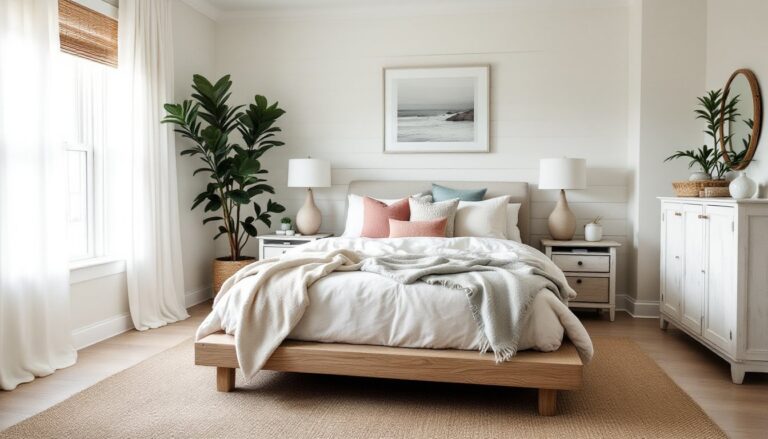
Wallpaper isn’t the fussy, permanent commitment it used to be. Modern accent wall wallpaper offers removable options, bold patterns, and textures that can completely change a room’s feel in an afternoon. Whether someone’s working with a tired bedroom, a bland living room, or a builder-grade rental, a single papered wall delivers more visual impact than a gallon of paint, and with peel-and-stick options, there’s no paste bucket required. This guide walks through the best wallpaper styles, room-by-room applications, selection criteria, and installation techniques to help anyone nail this project on the first try.
Table of Contents
ToggleKey Takeaways
- Accent wall wallpaper delivers more visual impact than paint and offers removable peel-and-stick options that are ideal for renters and budget-conscious homeowners.
- Pattern scale matters: large-scale geometric or botanical designs suit spacious rooms, while small-scale patterns work better in compact spaces to avoid overwhelming the area.
- Bedrooms, living rooms, and entryways are the best candidates for accent walls, while kitchens and laundry rooms should be avoided due to moisture and grease exposure.
- Proper wall preparation—patching, sanding, and priming—is more critical to success than expensive materials when installing accent wall wallpaper.
- Start plumb and not at corners, match patterns carefully at seams, and allow 24–48 hours for adhesive to cure before touching or cleaning the wallpaper.
Why Choose Wallpaper for Your Accent Wall?
Wallpaper brings pattern, texture, and depth that flat paint can’t match. A single accent wall creates a focal point without overwhelming the space, making it ideal for renters or anyone testing a bold look before committing to four walls.
Peel-and-stick wallpaper has changed the game. It installs without water-activated paste, repositions during application, and removes cleanly without damaging drywall, critical for rental properties or anyone who likes to switch things up every few years. Traditional paste-the-wall or pre-pasted options still exist and often offer more durable, textured finishes for permanent installations.
Cost-wise, accent wall wallpaper runs $30–$150 per roll (covering roughly 28–30 square feet), depending on material grade and design complexity. That’s competitive with premium paint once you factor in primer, multiple coats, and painter’s tape. A 10×12-foot wall typically requires 2–3 rolls.
Wallpaper also hides minor wall imperfections better than flat or satin paint. Textured or patterned designs camouflage nail holes, patched areas, or slight surface irregularities, though serious damage still needs repair before installation.
Popular Wallpaper Styles for Accent Walls
Geometric and Modern Patterns
Geometric wallpaper, hexagons, chevrons, quatrefoils, or abstract line work, reads contemporary and works well in spaces with clean-lined furniture. Large-scale geometrics make a room feel bigger: small, dense patterns can shrink a space visually, so scale matters.
Herringbone and chevron patterns add movement without busy-ness. They’re especially effective behind a bed, along a stairwell, or in a home office where the eye naturally tracks horizontal or diagonal lines. Stick with two or three colors max to keep it cohesive.
3D or textured wallpaper (embossed patterns, grasscloth, or faux brick) adds tactile interest. These work best in low-traffic areas like bedrooms or dining rooms, they’re more delicate than smooth vinyl and can show wear if brushed against frequently. Grasscloth, for example, is a woven natural fiber that brings warmth but can fray if pets or kids scrape it.
Metallic accents, gold, copper, or silver ink on a matte background, catch light and create depth. Use these in rooms with good natural light or dimmable fixtures: they can look flat in poorly lit spaces.
Natural and Botanical Designs
Botanical and tropical prints, palm fronds, ferns, oversized florals, bring an organic, layered look. They’re popular in bedrooms, bathrooms, and dining rooms where the goal is relaxation or visual interest without stark contrast. Dark botanical prints on a navy or charcoal ground create moody, sophisticated spaces: light florals on cream or white feel airy.
Mural-style wallpaper (forest scenes, mountain ranges, abstract watercolor) treats the wall like a canvas. These work best on uninterrupted walls, avoid outlets, switches, or windows that break up the image. Many DIYers discover creative accent techniques that pair murals with coordinating painted trim.
Wood grain, marble, or stone-look wallpaper mimics natural materials at a fraction of the cost and weight. Faux shiplap or reclaimed wood patterns are common in farmhouse-style spaces, while marble-look paper suits modern bathrooms or entryways. Just be realistic: up close, it won’t fool anyone, but from a few feet back, the effect holds.
Best Rooms for Wallpaper Accent Walls
Bedrooms are the top candidate. The wall behind the headboard is a natural focal point, and since bedrooms see less traffic and moisture than kitchens or baths, wallpaper longevity is higher. Bold patterns work here because the space is personal, not public.
Living rooms benefit from accent walls behind the sofa, fireplace, or TV. This anchors the seating area and balances large furniture pieces. Avoid papering walls with multiple windows or doors, the pattern gets chopped up and loses impact.
Dining rooms handle drama well. A single papered wall behind a sideboard or dining table adds formality without the stuffiness of four papered walls. Darker, richer patterns, deep greens, navy damasks, metallic geometrics, suit this space.
Bathrooms work if the wallpaper is vinyl-coated or specifically rated for moisture. Peel-and-stick paper in a humid bathroom will eventually lift at the seams. Powder rooms (half baths) are ideal: low moisture, small square footage, and a chance to try something bold without a big investment.
Entryways and hallways are high-visibility, low-square-footage spaces. A single accent wall makes a strong first impression, and since these areas typically lack furniture, the wallpaper becomes the star. Just ensure there’s enough uninterrupted wall, if the space is broken up by multiple doorways, the effect gets lost.
Avoid accent walls in kitchens unless the paper is scrubbable vinyl and away from the stove. Grease, steam, and splatters are wallpaper’s enemies. Similarly, laundry rooms see high humidity and temperature swings that can weaken adhesive over time.
How to Choose the Right Wallpaper for Your Space
Match pattern scale to room size. Large-scale patterns (12+ inch repeats) work in spacious rooms with high ceilings. In a small bedroom or powder room, they can feel overwhelming. Small-scale patterns (2–6 inch repeats) suit compact spaces but may read as texture rather than distinct design from a distance.
Consider existing colors and finishes. The wallpaper should pull from or complement the room’s palette. If the sofa is navy, a wallpaper with navy accents ties it together. If everything is neutral, the accent wall is the chance to introduce color. Sample rolls or peel-and-stick samples (often $5–$10) let you test in actual lighting before committing.
Evaluate lighting. Dark wallpaper in a north-facing or windowless room can feel cave-like. Light, reflective patterns brighten dim spaces. Metallics and high-gloss finishes amplify available light but also highlight wall imperfections, so prep work matters.
Check the material. Vinyl-coated wallpaper is scrubbable and moisture-resistant, good for high-traffic or humid areas. Non-woven wallpaper (typically peel-and-stick) is breathable, repositionable, and removes cleanly. Traditional paper-backed wallpaper offers the richest patterns and textures but requires paste and more skill to install. Grasscloth and natural fiber papers are beautiful but delicate and harder to clean.
Pattern repeat and waste. Wallpaper is sold by the roll, but you’ll need to account for pattern repeat, the vertical distance before the design starts over. A 24-inch repeat means more waste when matching seams. Straight-match patterns (design aligns horizontally) are easier for beginners than drop-match (design offsets between strips). Always order 10–15% extra to cover waste and future repairs.
Installation Tips for DIY Success
Prep the wall. Wallpaper needs a clean, smooth, primed surface. Patch any holes with spackle or joint compound, sand smooth (120-grit), and wipe down with a damp cloth to remove dust. If the existing paint is glossy, lightly sand or apply a primer to improve adhesion. Many experienced renovators note that budget transformations often hinge on thorough prep rather than expensive materials.
Gather tools. You’ll need a level (or plumb bob), measuring tape, utility knife with fresh blades, smoothing tool (plastic smoother or squeegee), and a straight edge. For traditional paste wallpaper, add a paste brush, water tray, and sponge. Peel-and-stick needs just a smoothing tool and knife.
Start plumb, not at the corner. Corners are rarely perfectly vertical. Measure out from the corner about one inch less than the wallpaper width, then use a level to draw a light pencil line. Align the first strip to that line, not the corner. This keeps the pattern straight even if the wall isn’t.
Install the first strip carefully. For peel-and-stick, peel back 12–18 inches of backing, align the top edge, smooth from center outward, then gradually peel and smooth downward. For paste wallpaper, apply paste evenly (or dunk pre-pasted paper), book the strip (fold pasted sides together without creasing), let it rest per manufacturer instructions, then hang and smooth.
Match the pattern at seams. Butt edges together, don’t overlap. Slide the strip slightly up or down to align the pattern, then smooth from the seam outward to avoid trapping air bubbles. Use a seam roller (or your finger) to press seams flat, but don’t over-roll textured or embossed paper: it can flatten the design.
Trim excess. Once a strip is smoothed, use a straight edge and sharp utility knife to trim top, bottom, and around outlets or switches. Change blades frequently, dull blades tear paper. Turn off power at the breaker before trimming around electrical boxes, and never install wallpaper over an outlet: cut out openings and reinstall cover plates over the paper.
Air bubbles and wrinkles. Small bubbles often disappear as the adhesive dries. For persistent bubbles in peel-and-stick, carefully peel back and reapply. With paste wallpaper, you can sometimes prick the bubble with a pin and smooth, or inject a tiny amount of adhesive with a syringe if it lifts later.
Let it cure. Avoid touching or cleaning the wallpaper for 24–48 hours. Peel-and-stick adhesive strengthens over time: traditional paste needs to dry fully. Some installers experienced with DIY decor projects recommend waiting a week before wiping down seams or adjusting furniture against the wall.
Safety notes. Wear safety glasses when cutting overhead or using a utility knife. If using traditional paste, work in a ventilated area, some adhesives emit fumes. Always turn off power before cutting around outlets.