
Imagine a home that not only knows your favorite temperature but also keeps your energy bills from skyrocketing like a rocket in a sci-fi movie. Welcome to the world of energy-efficient smart homes, where technology meets sustainability in a delightful dance. These homes are like the cool kids in the neighborhood, effortlessly blending comfort with eco-friendliness, all while saving you a few bucks.
With smart thermostats that adjust to your whims and energy-efficient appliances that make you feel like a superhero, it’s time to embrace the future. Who wouldn’t want a home that not only looks out for their comfort but also gives Mother Earth a high-five? Discover how these innovative solutions can transform your living space into a hub of efficiency and style, making your home the envy of everyone on the block.
Overview of Energy-Efficient Smart Homes
Energy-efficient smart homes integrate advanced technology with innovative design to minimize energy consumption. These homes utilize smart thermostats that optimize heating and cooling based on occupancy patterns and weather conditions. Smart thermostats can reduce energy usage by up to 15% annually.
Energy-efficient appliances also play a critical role in smart homes. They consume less energy compared to traditional options, helping lower utility bills and environmental impact. The U.S. Department of Energy reports that qualified ENERGY STAR appliances can save an average of $400 or more per year.
Smart lighting systems enhance energy efficiency by adjusting brightness based on natural light and user preferences. Users can schedule lights to turn off automatically when no one is home, which contributes to energy savings. This system can lead to an energy reduction of about 25% over conventional lighting.
Automated home systems manage energy consumption effectively. These systems provide the ability to monitor energy usage in real time, allowing homeowners to identify inefficiencies. Alongside solar panel installations, these systems further enhance energy independence and sustainability.
Implementing these technologies results in a more sustainable living environment. Increased comfort and convenience are also significant benefits. Homeowners enjoy added value through smart home features, which can enhance property resale potential. Embracing energy-efficient smart homes leads to stylish and modern living spaces that are environmentally responsible.
Key Features of Energy-Efficient Smart Homes
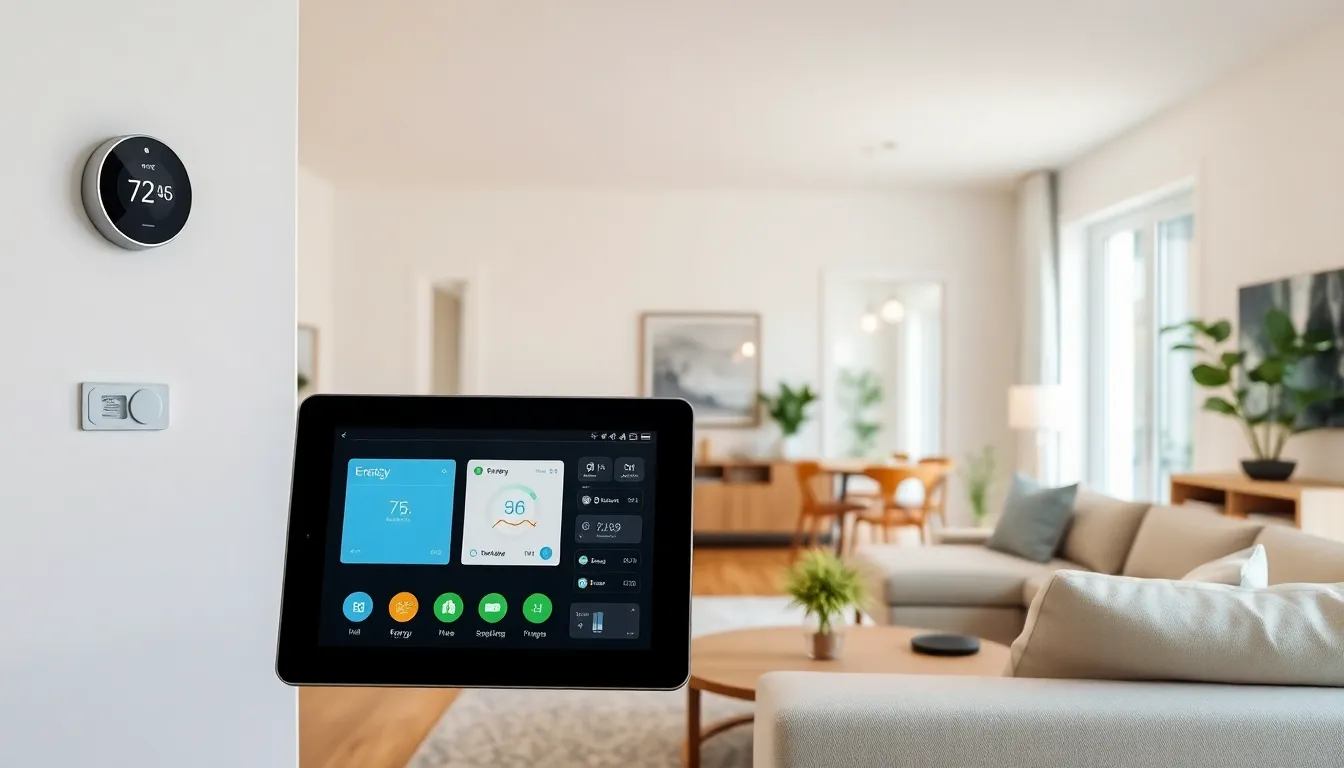
Energy-efficient smart homes integrate advanced technology with eco-friendly features. This combination boosts comfort while cutting energy expenses significantly.
Smart Thermostats
Smart thermostats learn occupants’ schedules to optimize heating and cooling. They can adjust temperatures based on weather forecasts and occupancy patterns. Annual energy usage may drop by up to 15% through these adjustments. Many models allow remote control via mobile apps, enabling users to monitor settings while away. Moreover, programmable features offer additional convenience, ensuring a welcoming environment when returning home.
Energy Monitoring Systems
Energy monitoring systems track real-time energy consumption in homes. These systems identify patterns and highlight areas for improvement, increasing energy savings. Users can receive alerts about unusual usage, prompting immediate action. Some systems even integrate with solar panels for efficient energy management. Homeowners can consider aggregated data for better decision-making on energy efficiency upgrades. These tools play a crucial role in making informed adjustments that enhance sustainability.
Benefits of Energy-Efficient Smart Homes
Energy-efficient smart homes offer numerous advantages that appeal to homeowners. Comfort and cost-effectiveness rank high among these benefits.
Cost Savings
Cost savings represent a key advantage of energy-efficient smart homes. Homeowners using smart thermostats can reduce energy consumption by up to 15% yearly. Utilizing appliances certified by ENERGY STAR often saves approximately $400 or more annually. Smart lighting systems help decrease energy use by about 25% compared to conventional options. Tracking real-time energy consumption allows homeowners to identify energy waste and optimize usage further. Integrating these smart technologies leads to substantial long-term financial benefits.
Environmental Impact
Environmental impact plays a significant role in the benefits of energy-efficient smart homes. These homes contribute to lower carbon footprints through reduced energy consumption. Smart home systems optimize energy utilization, which can lead to less reliance on fossil fuels. Adoption of renewable energy sources, such as solar panels, enhances overall sustainability. Additionally, the use of energy-efficient appliances minimizes waste generation. By choosing smart technologies, homeowners actively participate in efforts to mitigate climate change, creating a more sustainable future for all.
Challenges in Implementing Energy-Efficient Smart Homes
Energy-efficient smart homes face several challenges that can hinder effective implementation. Understanding these obstacles helps homeowners prepare for the transition.
Initial Costs
Initial costs play a significant role in adopting energy-efficient smart home technology. Installation of smart devices and systems incurs expenses, which may deter some individuals. Smart thermostats and ENERGY STAR appliances offer long-term savings. Upfront investments often exceed $1,500, depending on the home’s size and current systems. Additional costs for professional installation can further strain budgets. Despite this, many homeowners recover expenses through energy savings over time. Evaluating financing options can alleviate some financial pressures.
Technology Integration
Technology integration poses another challenge for energy-efficient smart homes. Compatibility between devices often complicates installation. Various manufacturers produce smart devices, leading to potential communication issues between systems. Homeowners may find it challenging to maintain a cohesive network. Moreover, a reliable internet connection is essential for optimal performance. Situations can arise where outdated devices limit smart technology’s full potential. Prioritizing Wi-Fi range and connectivity minimizes these integration issues. Adopting platforms that support multiple devices simplifies management and enhances user experience.
Energy-efficient smart homes represent a significant step toward sustainable living. By integrating advanced technology with eco-friendly practices, homeowners can enjoy enhanced comfort while significantly reducing energy costs. The benefits extend beyond financial savings, contributing to a lower carbon footprint and a healthier planet.
Though initial investments and technology integration present challenges, the long-term advantages far outweigh these hurdles. Embracing energy-efficient solutions not only improves daily living but also supports a more sustainable future. As homeowners navigate this transition, the potential for a stylish and efficient home becomes an achievable reality, paving the way for a greener lifestyle.

