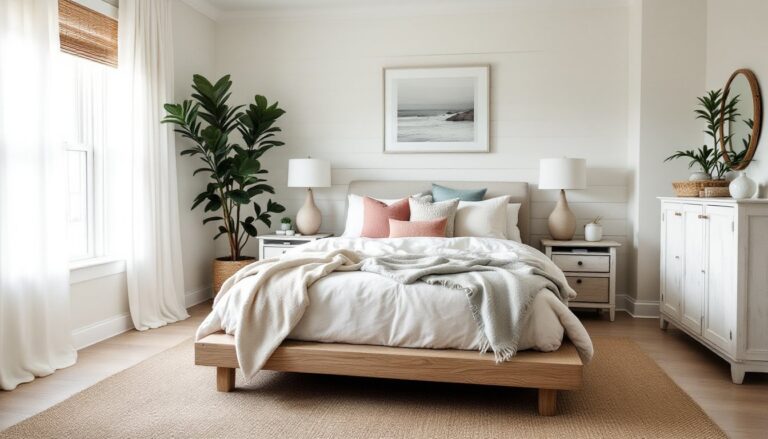
Blank bedroom walls are missed opportunities. The right wall decor doesn’t just fill empty space, it sets the tone, anchors the room’s design, and can even make a small bedroom feel larger or a cold one feel inviting. Modern wall treatments have evolved past the single piece of art centered over the bed. Today’s approach mixes function, texture, and visual interest while keeping the space clean and intentional. Whether working with drywall that’s been primed and ready or looking to cover imperfections without major demolition, these modern bedroom wall decor ideas offer practical starting points that range from weekend projects to installations that might take a full day and a helper.
Table of Contents
ToggleKey Takeaways
- Modern bedroom wall decor ideas balance simplicity with layers—using clean lines and intentional negative space instead of heavy, ornate treatments.
- Vertical elements like tall art or floor-to-ceiling panels draw the eye upward and make standard ceilings feel taller, while horizontal arrangements like gallery walls widen narrow rooms.
- Textured wall treatments and 3D panels add depth and warmth while absorbing sound, making them ideal for bedrooms with hard flooring.
- Mirrors and reflective surfaces amplify natural light and create the illusion of more space, especially when placed opposite or adjacent to windows.
- Floating shelves and accent walls—whether painted in deep tones or fitted with geometric wallpaper—combine functional storage and visual impact without requiring permits or major construction.
- Proper installation using studs, appropriate hardware (D-rings, French cleats, or toggle bolts), and careful planning ensures your wall decor stays secure and looks intentional.
Why Modern Wall Decor Matters for Your Bedroom
Modern wall decor serves dual purposes: aesthetic impact and functional design. Unlike traditional heavy drapery or ornate frames, modern treatments emphasize clean lines, intentional negative space, and materials that complement rather than compete.
Visual height is a key principle. Vertical elements, tall art, floor-to-ceiling panels, or stacked shelving, draw the eye upward and make standard 8-foot ceilings feel taller. Horizontal arrangements, like gallery walls or long floating shelves, widen narrow rooms.
Material choice affects both look and maintenance. Smooth surfaces (metal, glass, glossy paint) reflect light and suit minimalist spaces, while textured treatments (wood slats, fabric panels, 3D tiles) add warmth and absorb sound, a real benefit in bedrooms with hard flooring.
Modern doesn’t mean cold. The style balances simplicity with layers: a neutral wall might feature a single oversized canvas, a sculptural mirror, and a narrow shelf with carefully chosen objects. The restraint is the point. Every piece should justify its spot on the wall.
Minimalist Art and Gallery Walls
Gallery walls have evolved from chaotic salon-style arrangements to curated grids and asymmetric clusters with breathing room. The modern approach limits color palettes, uses matching or complementary frames, and leaves at least 2–4 inches between pieces to avoid visual clutter.
Materials:
- Frames (wood, metal, or acrylic)
- Hanging hardware (picture hooks rated for frame weight, or a picture rail system)
- Level and measuring tape
- Painter’s tape for layout mockup
Steps:
- Lay out the arrangement on the floor first. Photograph it.
- Cut paper templates matching each frame’s dimensions. Tape them to the wall to test spacing and sight lines from the bed and doorway.
- Mark the center of each template, then measure and install hooks or nails. For drywall without studs, use anchors rated to 20–50 lbs depending on frame weight.
- Hang from the center outward to keep alignment tight.
Pro tip: Keep the bottom edge of the lowest row at 57–60 inches from the floor, standard gallery height that works for most viewers.
Oversized single pieces work well over beds or dressers. A 48 × 36-inch canvas or larger makes a strong statement without requiring multiple anchor points. Consider abstract line art, black-and-white photography, or organic shapes that echo other bedroom textiles.
Framing alternatives include canvas wraps (no frame needed), floating frames (art appears suspended), or museum-style matting for works on paper. Museums and contemporary design showcases often use wide mats and thin frames to emphasize the art itself.
Textured Wall Treatments and 3D Panels
Texture adds depth without color. 3D wall panels, wood slat walls, and fabric-wrapped boards introduce shadow lines and tactile interest, particularly effective on accent walls behind beds.
Common materials:
- MDF or PVC 3D panels: Lightweight, paintable, typically 12 × 12 or 24 × 24 inches. Install with construction adhesive (like Loctite PL Premium) and finishing nails.
- Wood slats: Use 1 × 2 or 1 × 3 furring strips (actual dimensions 3/4 × 1.5 or 3/4 × 2.5 inches) spaced evenly over a backer board or directly to studs.
- Acoustic fabric panels: Stretched fabric over foam-core frames. Good for sound dampening in shared walls.
Installation basics for wood slat walls:
- Locate studs and mark with painter’s tape. For full coverage, install horizontal 1 × 4 nailers every 16–24 inches, screwed into studs.
- Rip slats to uniform width if needed (a table saw ensures consistency). Sand edges smooth.
- Space slats with a spacer jig, a scrap piece of wood cut to your desired gap (commonly 1–2 inches).
- Attach slats with a brad nailer (18-gauge, 1.5-inch brads) or finish nails and wood glue. Check level every 3–4 slats.
- Fill nail holes with wood filler, sand, then stain or paint.
Safety note: Wear a dust mask when cutting MDF, it creates fine particulate. Eye protection is essential for any nailing or sawing.
These treatments don’t require electrical or plumbing work, so permits typically aren’t needed. But, if mounting heavy panels over drywall, make sure fasteners hit studs or use toggle bolts rated for the load. Hollow-wall anchors aren’t sufficient for multi-pound installations.
Statement Mirrors and Reflective Surfaces
Mirrors amplify natural light and create the illusion of more space, critical in smaller bedrooms. Modern mirrors favor geometric shapes (round, arched, hexagonal) and frameless or minimal metal frames over ornate gilded styles.
Placement strategy:
- Opposite or adjacent to windows to bounce light deeper into the room.
- Over dressers or nightstands as functional and decorative pieces.
- Leaning against the wall (large floor mirrors, 60+ inches tall) for a casual, flexible look.
Hanging heavy mirrors safely:
- Use D-rings or French cleats for mirrors over 20 lbs. French cleats distribute weight across a horizontal mount, one cleat screwed to studs, the other attached to the mirror back.
- For drywall-only mounting, toggle bolts or molly bolts rated to 50+ lbs per anchor are minimum.
- Always mount into at least one stud when possible. Use a stud finder: don’t guess.
Types of modern mirrors:
- Round or pill-shaped: Soften angular furniture and provide contrast to rectangular artwork.
- Frameless beveled: Clean, unobtrusive, suits minimalist schemes.
- Metal-framed (brass, matte black, chrome): Add a subtle accent color without dominating.
- Grouped small mirrors: Arrange 3–5 matching or varied shapes in a cluster for a sculptural effect.
Pro tip: Avoid placing mirrors directly opposite the bed if they reflect light sources that might disrupt sleep. Side walls or angled placements work better for restful spaces.
Reflective materials extend beyond glass. Polished metal art, mirrored furniture accents, and even high-gloss paint on one wall can add subtle reflection and layer visual interest into modern interiors.
Floating Shelves and Functional Wall Decor
Floating shelves combine storage and display, keeping surfaces clean while adding architectural detail. Modern installations favor stained or painted wood, metal brackets with minimal profiles, or completely concealed mounting systems.
Materials and tools:
- Solid wood shelves (poplar, oak, walnut) or 3/4-inch plywood edge-banded for a finished look
- Floating shelf brackets or heavy-duty L-brackets
- 2.5–3-inch wood screws for stud mounting
- Level, stud finder, drill with bits
Installation steps:
- Decide on shelf height. For over-bed installations, leave at least 6–10 inches clearance above pillows. For general display, eye level (60 inches) works well.
- Mark stud locations. Floating shelves must anchor into studs, drywall anchors alone won’t support books or decor long-term.
- Install brackets level and flush. Use at least two brackets per shelf, spaced to hit separate studs.
- Slide or mount the shelf onto brackets. Some systems use a hollow-core shelf that slides over a steel rod: others rest on L-brackets.
- Test with weight before styling. Load it with a few heavy books and let it sit overnight.
Styling tips:
- Group in odd numbers: Three small objects or a plant, book stack, and sculpture create visual balance.
- Vary height: Use risers, small pedestals, or leaning frames to break up a flat plane.
- Leave gaps: Modern shelving isn’t about cramming every inch. Negative space is intentional.
Functional options:
- Bedside shelves replace nightstands in tight spaces.
- Shallow picture ledges (3–4 inches deep) let you swap art easily without new nail holes.
- Integrated LED strip lighting under shelves adds ambiance and task light (low-voltage, easy to wire with adhesive-backed strips).
If mounting heavy-duty shelving or installing in lath-and-plaster walls (common in older homes), predrill and use appropriate hardware. Plaster cracks easily: work slowly and consider toggle bolts or screw-in anchors designed for old wall systems.
Bold Accent Walls with Paint and Wallpaper
Accent walls define modern bedrooms without overwhelming the space. The key is choosing one wall, typically the wall behind the bed, and committing to color, pattern, or texture.
Paint options:
- Matte or flat finishes hide imperfections and give rich, velvety color.
- Eggshell or satin offer slight sheen and easier cleaning, better for high-contact areas.
- Deep tones (charcoal, navy, forest green, terracotta) create drama. Lighter accent walls (soft blush, sage, warm gray) add subtlety.
Prep work (don’t skip this):
- Patch holes and cracks with spackle or joint compound. Sand smooth once dry.
- Clean walls with a damp cloth to remove dust and oils.
- Apply primer if painting over dark colors, stains, or fresh drywall. One gallon covers roughly 350–400 square feet.
- Tape edges with painter’s tape. Press firmly to prevent bleed.
Application:
- Cut in edges with a brush (corners, trim, ceiling line).
- Roll in a W pattern to distribute paint evenly, then fill in. Use a roller with appropriate nap (3/8-inch for smooth walls, 1/2-inch for slight texture).
- Two coats minimum for even coverage. Let dry 2–4 hours between coats (check the can).
Exploring creative wall painting ideas can help refine color choices and techniques that align with modern aesthetics.
Wallpaper:
- Peel-and-stick (removable): Ideal for renters or commitment-phobes. Easier to apply than traditional paste, but surface must be smooth and clean.
- Traditional paste wallpaper: More durable, better for textured or high-end patterns. Requires patience and precise alignment.
- Patterns: Geometric prints, subtle textures (grasscloth, linen-look), or large-scale murals suit modern bedrooms. Avoid busy florals unless going for eclectic maximalism.
Installation tips:
- Measure wall height and width. Order 10% extra to account for pattern matching and waste.
- Start in the least visible corner (often behind the door).
- Use a smoothing tool or squeegee to remove air bubbles as you apply.
- Trim excess with a sharp utility knife along baseboards and ceiling.
Safety and cleanup: Use a respirator or N95 mask if sanding joint compound or working in poorly ventilated spaces. Latex paint cleanup requires soap and water: oil-based needs mineral spirits.
Both paint and wallpaper are cosmetic changes that don’t require permits. But, if the wall shows signs of moisture, peeling, or mold, address the underlying issue before decorating, applying finishes over compromised drywall leads to failure.
Conclusion
Modern bedroom wall decor isn’t about following a rigid formula, it’s about intentional choices that balance style and function. Whether installing a gallery wall with a level and some patience, mounting 3D panels for texture, or committing to a bold accent wall, each project transforms blank drywall into a designed space. Start with one wall, one idea, and the right tools. The rest follows.